

Exemplary service. An embodiment of values.

Garage Door Spring Replacement in Sarasota & Manatee Counties

At Southern Garage Doors, we don’t install stock torsion springs. Each spring is custom-cut and tailored to your specific door’s weight and hardware — measured, balanced, and wound on-site for precise performance.

Years ago, this was the standard practice in our industry. Every technician carried the tools and know-how to measure, weigh, and cut springs for each door right there at the home. Over time, many companies moved away from it — replacing craftsmanship with convenience and installing pre-boxed, one-size-fits-all springs to save time.

We’ve chosen to keep doing it the old-fashioned way — because it’s still the best way. By cutting and fitting springs on-site, we ensure your door is perfectly balanced, operates quietly, and lasts longer. It takes more care, but it’s the kind of work we’d want done on our own homes — and that’s what matters most.

Problem — Why Broken Springs Stop Everything

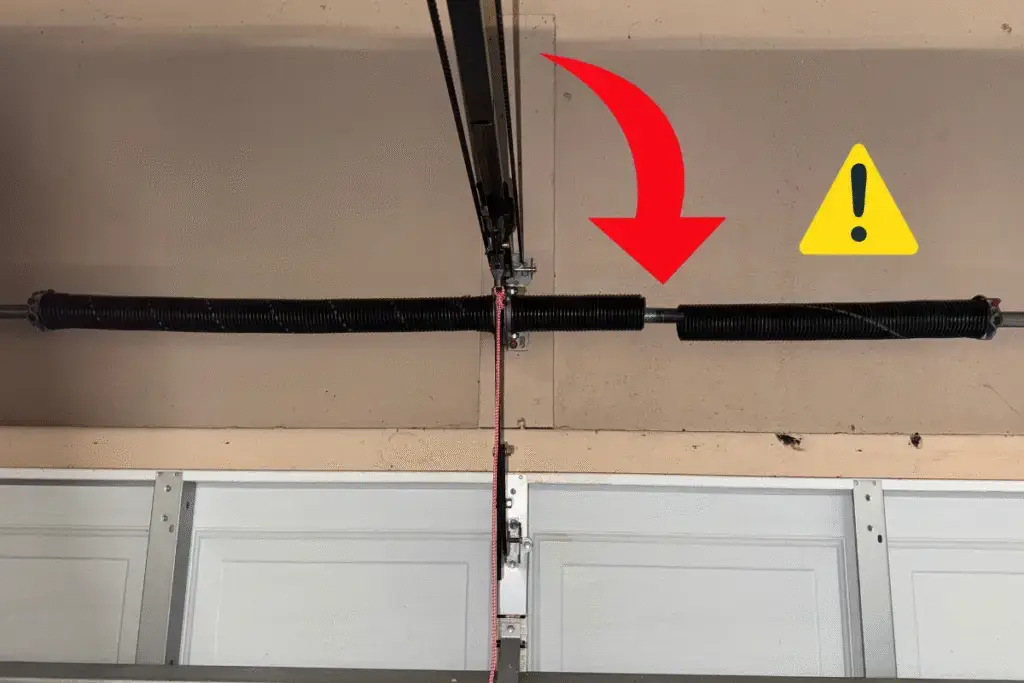
A broken torsion spring is one of the most common — and most disruptive — garage door failures. You may hear a sharp snap or bang, or find the door suddenly too heavy to lift. Springs are what counterbalance the full weight of your door — often more than 200 pounds.

Standard factory springs are typically rated for about 10,000 cycles (one open + close = one cycle). For many families, that’s five to seven years of daily use before fatigue sets in.

When a spring fails:

  • The door becomes unsafe to lift

  • The opener strains or cannot move the door

  • Additional components may wear prematurely

  • The system becomes unsafe to operate

This is not a repair to force or “get by” with. It requires careful measurement, the right tools, and precision.

At Southern Garage Doors, we see a broken spring as more than a mechanical failure — it’s an opportunity to restore balance, safety, and confidence in how your door operates.

Our Approach & Process — Simple, Careful, Thorough

We take time to look at the whole system — not just the broken spring — so the repair fits the door, not the other way around.

1. We Weigh the Door

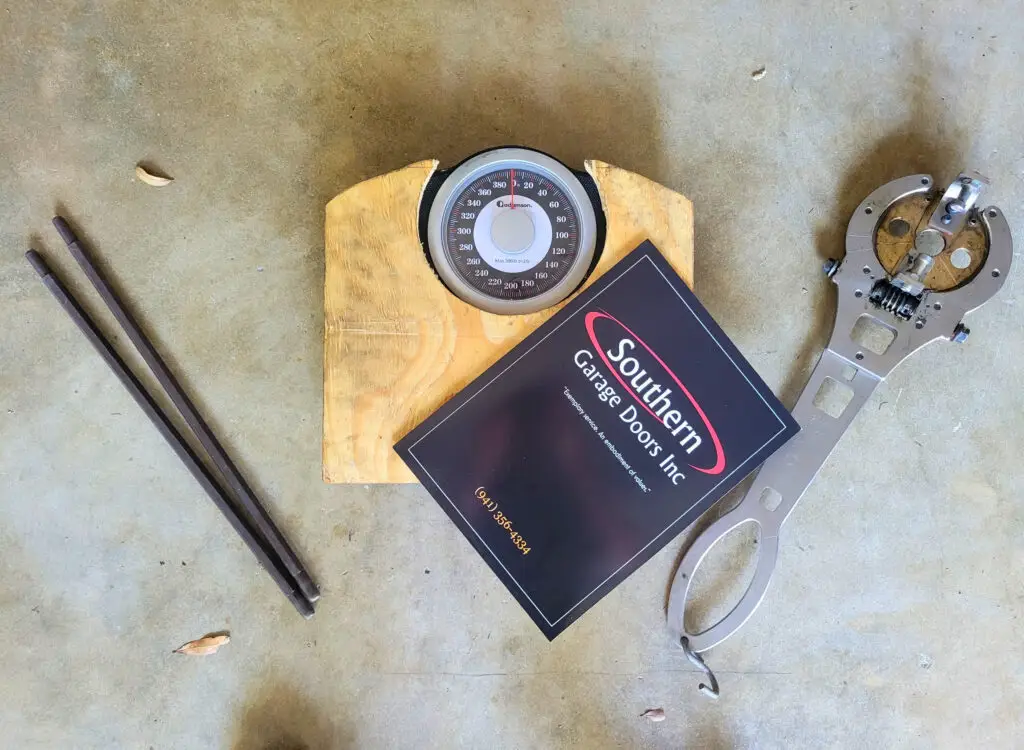
With the tension released, we slide a scale under the bottom panel to find its true weight — not an estimate or a guess. This measurement prevents over- or under-sized springs from being installed and ensures the entire system is balanced before anything new is added. Knowing the exact weight protects your opener, keeps the door neutral, and sets the foundation for a safe, long-lasting repair.

2. We Choose and Cut the Springs

Once the door’s weight and height are confirmed, we select the precise wire size and length from the coils we carry on the truck. Each spring is measured, cut, and fitted on-site — the way craftsmen used to do it before the industry shifted to one-size-fits-all replacements. We carry multiple wire sizes for accurate matching, fit each spring specifically to your door, and check the ends before installation. A properly matched spring lasts longer, runs quieter, and reduces unnecessary strain on your opener.

3. We Install and Wind the Springs

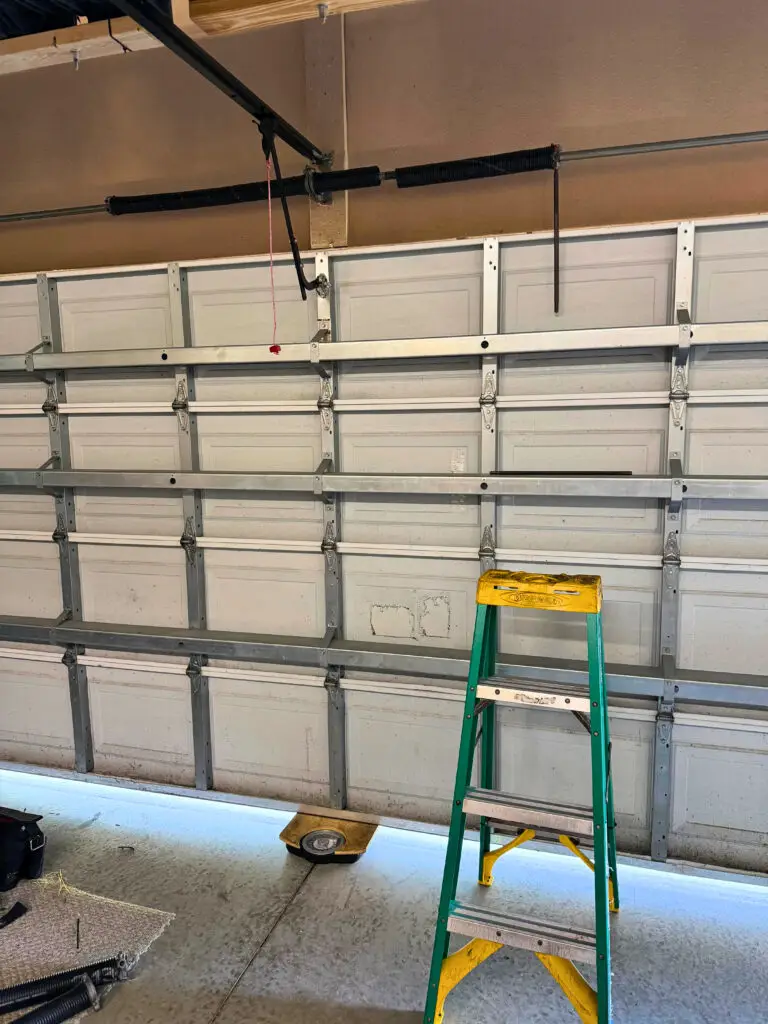
The new springs are mounted on the torsion bar, the cables are set, and the coils are wound carefully by hand — roughly one full turn per foot of door height, then adjusted until the balance feels exactly right. We use proper winding bars only, never drills, and we tighten the cable drums evenly on both sides. Finally, we lift the door by hand to confirm that it sits in neutral balance. Correct tension ensures the door lifts smoothly and evenly, whether operated manually or by the opener.

4. We Test and Calibrate

We reconnect the opener and run the door through several full cycles, checking that the travel limits are correct, adjusting force settings as needed, and confirming the safety sensors respond properly. Lubrication is applied to the moving points so the door travels smoothly. This final calibration step makes sure the springs, door, and opener work together as a single, quiet, dependable system.

5. We Review and Complete the Job

After testing and calibration, we walk you through the work so you know exactly what was done and how the door should feel. Once everything is clear, we collect payment and provide your documentation. Your warranty coverage begins at that point, giving you straightforward protection and closing the job with the same care shown throughout the repair.
What’s Included in Every Spring Replacement

Spring System Inspection

  • Identify broken or fatigued springs

  • Inspect cables, drums, bearings, center plate

  • Evaluate gear ratios and height-to-turn requirements

Precision Spring Preparation

  • Door weighed to determine exact lift requirement

  • Custom wire size selected

  • Springs cut and fitted onsite

Professional Installation

  • Springs mounted and wound

  • Drums aligned and tightened

  • Door balance tested manually

Opener Calibration

  • Force settings tuned for new spring load

  • Travel limits tested

  • Safety beams confirmed

Final Safety & Performance Check

  • Smooth travel verified

  • Neutral balance confirmed

  • All moving points lubricated

Quiet, Balanced Movement

With springs cut to your door’s exact weight, the door moves smoothly and evenly, without the grinding, jerking, or strain caused by mismatched stock springs.

Safer, More Reliable Operation

Correct wire size, proper winding, and true balance reduce stress on the opener and hardware, giving the whole system a steadier, safer feel every time it moves.

Clear Explanation of Your Door’s Balance

We show you how a properly balanced door should lift and hold, explain the adjustments made, and make sure you know what to expect from a correctly fitted spring system.

Work Made to Last Longer

Custom-cut springs matched to the door’s real weight — not pre-boxed substitutes — extend the lifespan of the system and prevent the uneven wear common with generic replacements.

Google Reviews

Steady Care, When You’re Ready for It

If it’s been a year since your last tune-up, give us a call when it fits your day. No pressure — just a careful inspection, quiet adjustments, and clear communication from start to finish.

FAQ

Over time, every cycle of your garage door — one full up and one full down — bends the spring just a little. Think of it like bending a paper clip back and forth: eventually it fatigues and snaps. The spring is doing the heavy lifting for your door and with each cycle the metal gets a little “tired.” At that point the spring has simply reached the end of its safe life. Replacing only the spring that broke doesn’t stop the same fatigue that exists in the other spring on the door.

A “cycle” refers to one complete opening and one closing of the garage door. Springs are rated by how many cycles they can perform before fatigue—typically around 10,000 cycles is the industry standard for residential torsion springs.  So when you think about how often you use your door — twice a day, five times a day, or more — you can see how the number of cycles adds up and tells you when a spring is nearing the end of its life.

The commonly cited baseline is around 10,000 cycles for standard residential torsion springs. But that isn’t a guarantee it will last exactly that long in years — because your usage, door weight, environment (humidity, rust) and how well the door is balanced will all affect actual longevity. For some homes in our region with heavy doors and high use, the lifespan may be shorter.

If your door uses two torsion springs (which most double-car doors do) and one breaks, the other one has gone through essentially the same number of cycles and is usually very near its limit too. Even if it hasn’t snapped yet, it’s fatigued. Replacing only one spring means you’re leaving yourself another service call soon. It’s far more cost-effective and reliable to replace both springs when we’re already working on the system.

Because many homes here have heavier hurricane-rated doors and frequent use (garage as main entry, large family, opening often), springs often last anywhere from about 3 to 12 years, depending on cycles, door weight, and maintenance. If a spring breaks it’s a clear sign the material has reached its cycle limit. Our goal is to install properly rated springs and balance the door so it runs for as long as the materials allow.

Standard residential torsion springs are rated around the 10,000-cycle mark. High-cycle springs are built with thicker wire, more coils, or larger diameter to increase lifespan—some might be rated 20,000, 30,000 cycles or more. If you use your door very often, or have a heavy door, a high-cycle spring is a smart investment.

Because it’s a simple image that helps homeowners understand fatigue in a metal coil. Just as repeatedly bending a paper clip eventually causes it to snap, each garage-door cycle bends the torsion spring slightly. Over thousands of cycles, the metal fatigue builds up. By using that metaphor, we’re speaking plainly about what the mechanic sees on site — not just quoting numbers, but giving you a relatable explanation.

Yes — absolutely. A heavier door, larger panels, added insulation, or stronger lift hardware means the springs do more work with each cycle. If a door weighs more, the spring wears faster. Also, if the door isn’t balanced properly or the cables/drums are worn, that extra strain shortens spring life. That’s why we weigh the door, measure, and cut springs on site — so the spring is matched precisely to the door.

While it is technically possible, we don’t recommend it. If we only replace one spring, you’re leaving the second one near its failure point — and because the system is already open and we’re doing the labor, it makes much more sense to do the work once and be done. It’s a better value and results in fewer future service calls.

After proper spring replacement and balancing you’ll notice several subtle things: the door lifts with less effort (by hand or opener), it stays where you leave it (around waist height when tested), it moves smoothly and quietly, and the opener isn’t straining or binding. It won’t be dramatically flashy — but it will just work right. That steady, smooth operation is what we aim to deliver every time.